
Real Story · Skin Health
7 Things Nobody Tells You About Your Skin After Major Weight Loss
I lost 66 pounds and I have never regretted it. But there's a part nobody posts about, and it took me eighteen months to understand what was actually happening.

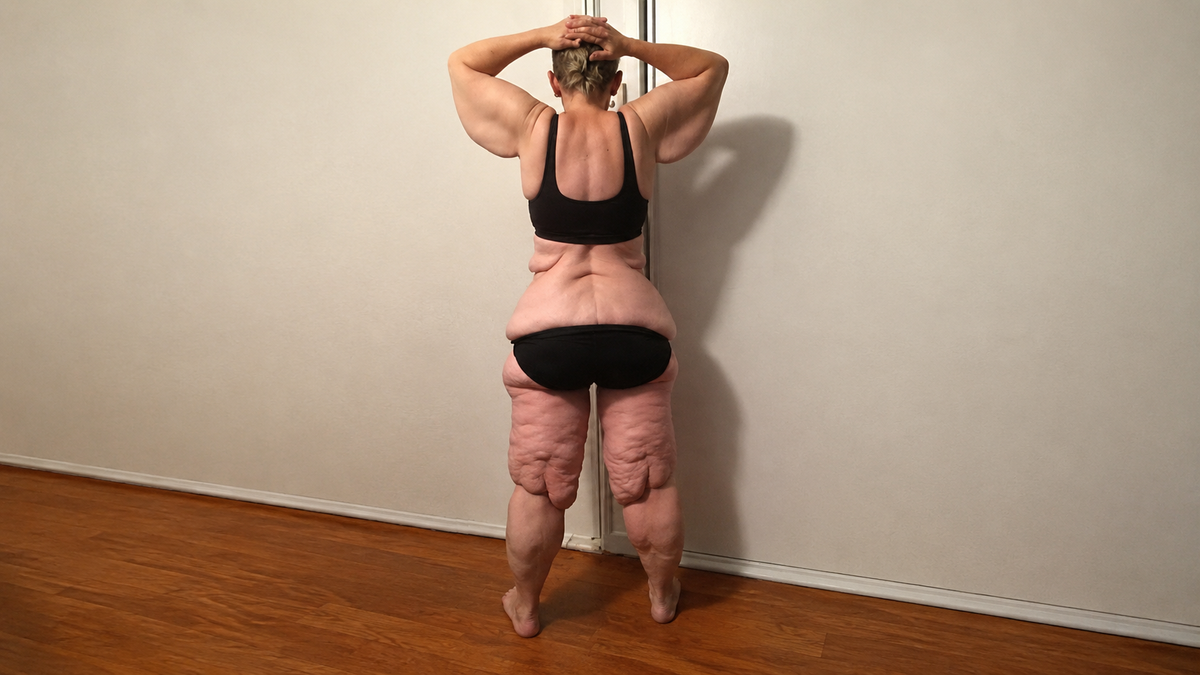
Everyone kept telling me how amazing I looked. I couldn't tell a single one of them what was actually happening under my clothes.
This is everything I learned in three years, in the order I wish someone had told me.
Dressed you're a success story. Undressed is a different story. That's the trap.
People who hadn't seen me in a year stopped mid-sentence. My sister cried. A woman I'd known for ten years walked past me in a store because she didn't recognise me.
And the skin didn't shrink with me. It went the other way — the more I lost, the more it hung, and the deeper the folds got. Places that used to be flat against me were now pockets that trapped heat and never dried.
Here's why it's a trap. You did the hardest thing you've ever done. You're not allowed to be miserable about the result. If you say anything, you sound ungrateful.
So you say nothing. And that's why so many of us suffer in silence for years.
It's not a hygiene problem, no matter how much it feels like one
That was my first thought. That I wasn't thorough enough. That I hadn't dried properly.
I was showering twice a day. It made no difference.
The fold isn't dirty — the fold is wet. Skin on skin means no airflow, sweat has nowhere to evaporate, and it sits there for hours. No amount of washing changes that, because the problem is back within an hour of getting out of the shower.
Stop blaming yourself. It isn't neglect. It's physics.
It has a name. Your doctor probably won't tell you.
I saw my primary care doctor, then two dermatologists. Over eighteen months I collected three prescriptions.
Not one of them ever told me what it was called.
I found the word myself at eleven at night, four pages deep into a search: intertrigo. Inflammation of the skin fold.
It isn't rare. It's common in anyone with body folds — after weight loss, after pregnancy, with larger breasts, with diabetes, in heat. There are medical papers about it.
Eighteen months treating something whose name I didn't know. That made me angrier than the rash did.
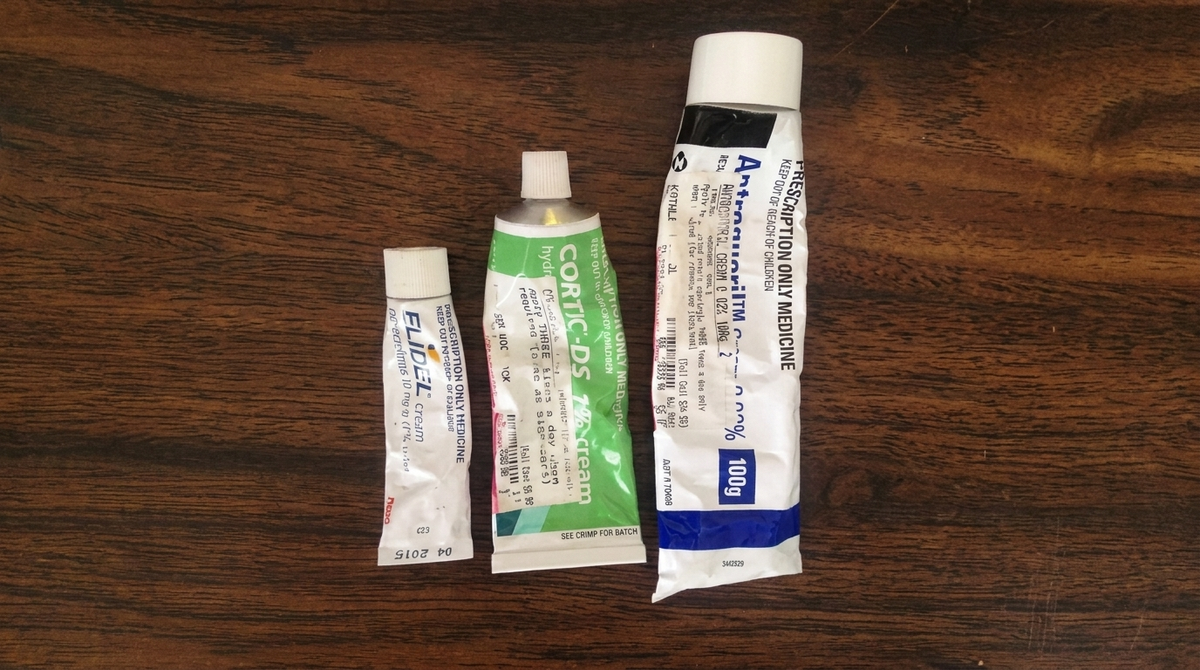
Three prescriptions. No diagnosis I could say out loud.
Powder helps for three hours, then it starts working against you
This was my first defence and the one I held onto longest.
Powder absorbs moisture and it genuinely helps — in the morning. But somewhere around hour six it absorbs enough to clump, and turns into a gray paste that settles into the crease.
At that point it isn't reducing friction anymore, it's adding to it. A gritty paste between two surfaces that rub is worse than nothing.
I carried a tin in my bag and reapplied at lunch. That was my system.
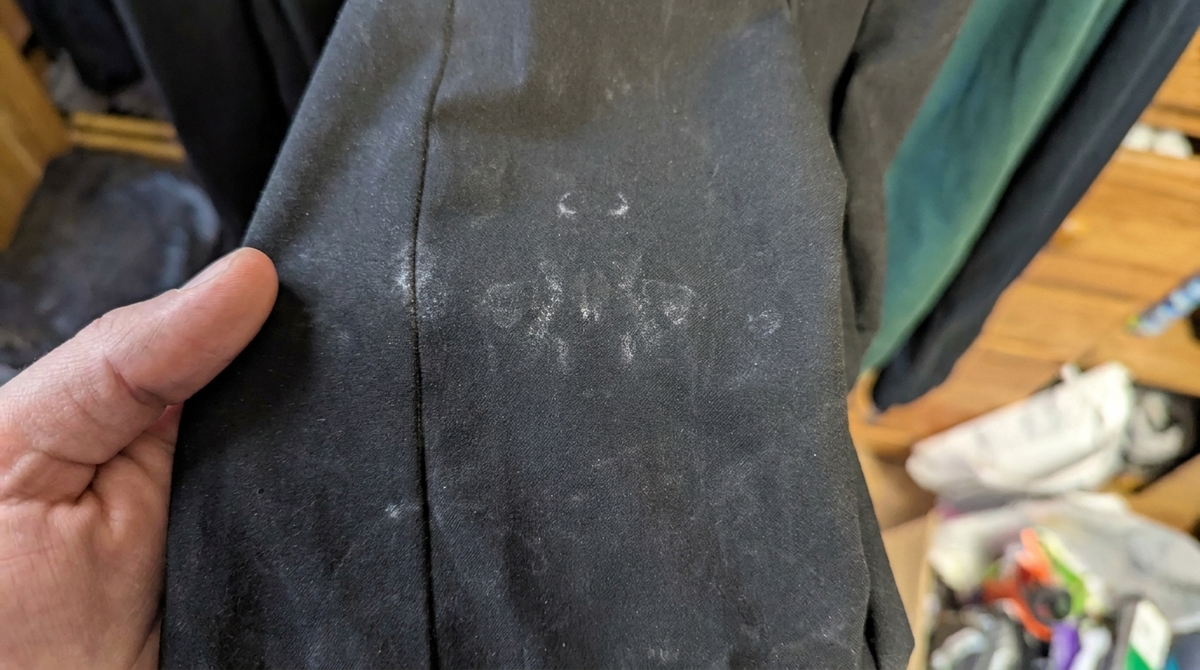
By hour six it isn't powder anymore.
Steroid cream is the most convincing failure of them all
This is the one that stings, because it works fastest.
My doctor prescribed it and it worked beautifully — for about four days. The redness dropped, the burning stopped, I thought it was over.
Then I finished the tube and within a week it was back. Angrier.
Steroid doesn't treat anything that causes the rash. It switches off the inflammation so you stop feeling it. Everything that was there is still there — it just stops reporting.
And long-term use thins the skin. Which means next time, it breaks more easily.
Three things are happening at once, not one. That's the whole answer.
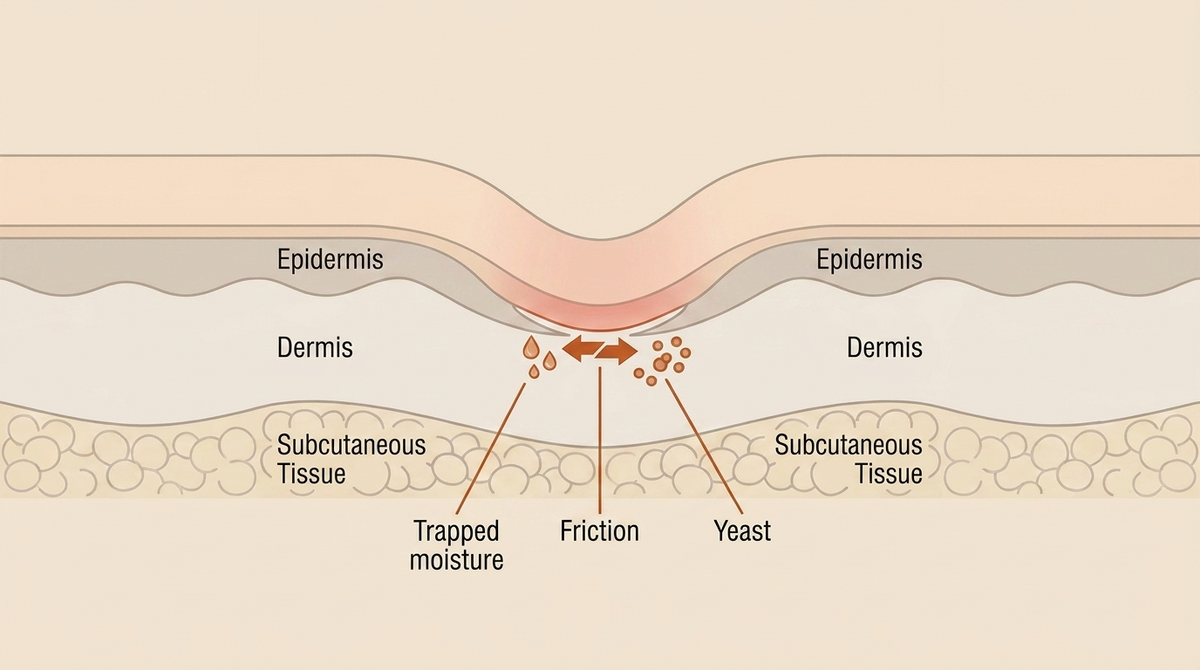
Moisture, friction and yeast feed each other. Treat one and the loop keeps running.
When I understood this, every failure suddenly made sense.
Moisture. No airflow, sweat sits, and the top layer of skin softens until it can't hold up to anything.
Friction. Every step, every time you sit down, that softened skin rubs itself raw.
Yeast. Warm, dark, wet, and now the barrier is broken. Candida lives on everyone's skin harmlessly, but that fold is exactly where it multiplies. That's where the smell comes from, and the smell is the part nobody talks about.
Now here's the part that matters.
Powder handles moisture and nothing else. Diaper cream handles friction and traps moisture underneath. Antifungal cream handles yeast but stays wet, so moisture and friction keep breaking the barrier down and the yeast comes straight back.
Every single thing I tried solved one third and left the other two running.
That wasn't bad luck. That was arithmetic.
What finally held wasn't a stronger ingredient. It was the texture.
This surprised me most.
I needed something that dealt with all three at once — but it turned out something else mattered more: it had to not stay wet on the skin.
The stick I use now glides on dry. There's nothing to rub in and nothing to wait for — it leaves a silky film the second it touches the skin. It sounds like a small detail. It's the entire difference.
Zinc oxide sits between the two surfaces so they stop rubbing. Witch hazel and a silica-and-starch complex pull the moisture out and hold the fold dry instead of sealing wet skin in. An antifungal active handles the yeast that kept bringing it back.
And because it goes on dry, it doesn't slide, doesn't transfer onto clothes, and doesn't go paste at hour six.
There's one more thing I didn't expect to matter this much. I don't have to touch it. With a cream you're pushing your fingers into skin that's already raw, and you're doing it while trying to hold the fold open with your other hand. The stick I just run along the crease. One hand, standing up, no mirror.
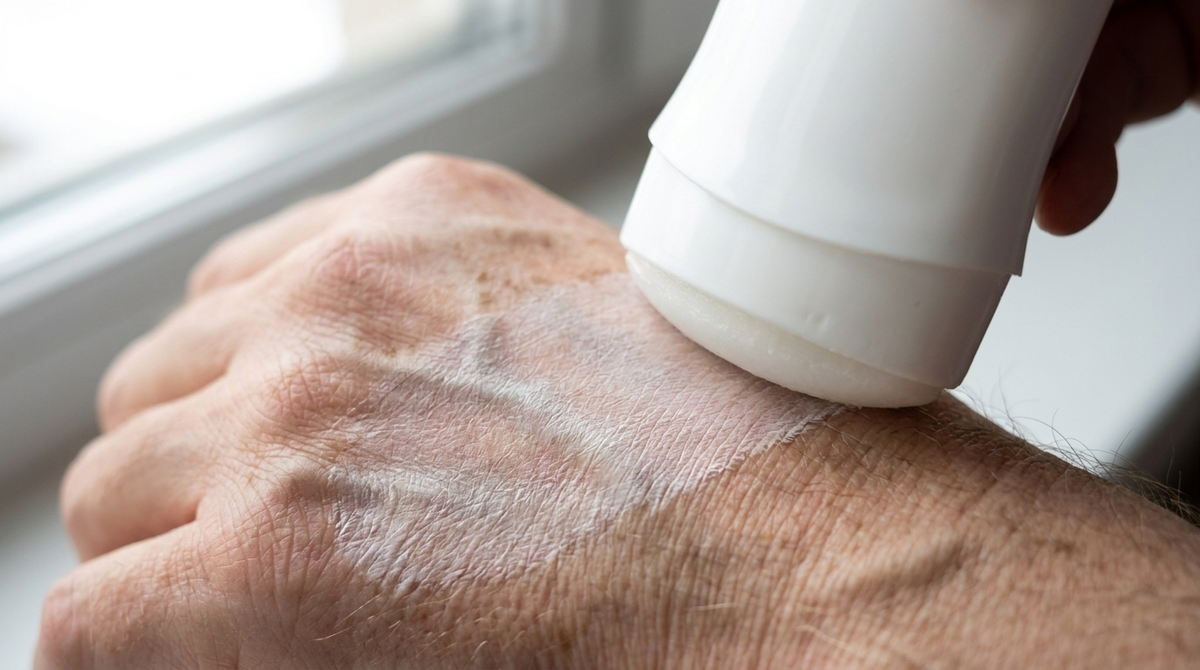
Glides on dry. No rubbing, no waiting.
Two honest things, because I was lied to enough getting here
The first application stung. My skin was broken and anything would have. It stopped by day two. If you give up after one application you'll think it doesn't work.
It does nothing for loose skin. The skin is still there and always will be, short of surgery. What changed is that the fold is dry, it doesn't burn, and it doesn't smell. I stopped caring how it looked a long time ago.
What the first week looked like
Night one the burning stopped. Not reduced — stopped.
Day two the fold was dry for the first time in eighteen months and the hair dryer went back in the cupboard.
Day four the redness had gone from angry to pink.
End of week one the skin looked ordinary. Not healed-looking. Ordinary. Like it had never happened.
Sundaye Anti-Chafing Stick
- Glides on dry — nothing to rub in
- Stops the burning on night one
- Steroid free, no rebound
- 365-day money-back guarantee
If you're where I was
You lost the weight. You did the hard part. And now you've got something that hurts, smells, and comes back every time you think you've beaten it — and you can't tell anyone, because from the outside you look like you won.
You're not being dramatic. You have a specific condition with a specific name, it's extremely common after major weight loss, and the reason nothing has held is that you've been treating one third of it at a time.
I wish someone had told me in month one instead of month eighteen.